
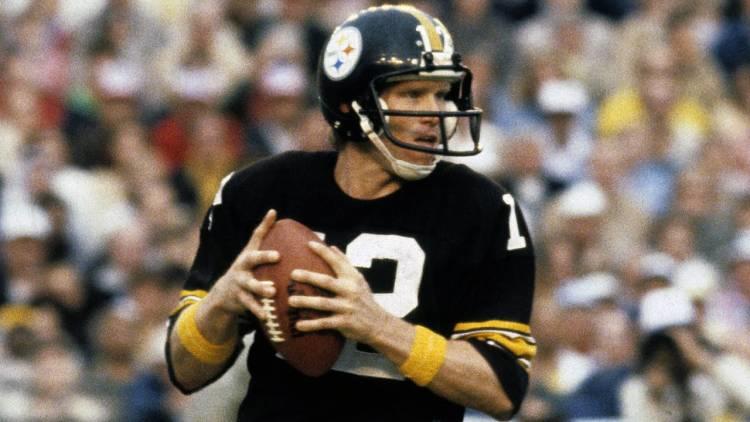
There aren't too many quarterbacks that have ever been able to make their own play calls throughout the midst of a game but one man in Terry Bradshaw did just that and became one of the greatest passers to ever take the field. It takes an extreme amount of courage, poise, and leadership to take ten other alpha personalities and direct them in unison for a greater cause then themselves and Terry Bradshaw didn't only have the balls to do so, he also had one of the most powerful arms football has ever seen. From 1966 to 1969, Terry Bradshaw attended Louisiana Tech University to play his college ball. In his first two seasons, Bradshaw started behind Phil Robertson, who is now known as the inventor of the duck caller and television personality on the reality show, Duck Dynasty. His junior year, Bradshaw led the Bulldogs to a 9-2 season and 33-13 victory over Akron in the Rice Bowl. His senior year, Bradshaw led the Bulldogs to an 8-2 overall record.
In the 1970 NFL Draft, Terry Bradshaw was selected 1st overall by the Pittsburgh Steelers where he would play his entire fourteen-season NFL career. In his second season with the Steelers, Bradshaw became the starting quarterback and helped the Steelers secure their first-ever championship defeating the Minnesota Vikings in Super Bowl IX. This win sparked a four-title reign within a six-year period as Bradshaw led the Steelers on field as a quarterback and technically an offensive coordinator winning Super Bowls, X, XIII, and XIV all the while being named MVP for his performances in Super Bowls XIII and XIV. Terry Bradshaw became the first quarterback ever to win three and four Super Bowls. Somehow, Bradshaw only was invited to three Pro Bowls (1975, 1978, and 1979) and earned one NFL MVP Award (1978).
Wondering where to go in 2020 for an amazing deal, to beat the crowds, or for a truly once-in-a-lifetime travel experience? These destinations are on travel addicts’ radar for rightfully hyped 2020 events, new offerings, and recent developments that make them a must-visit right now.
On top of the majestic scenery its long been known for, Montana is a newly trendy nature getaway celebrated for its expanding luxury hotel scene, culinary offerings, and shop-local boutiques, according to an American Express study detailing where cardholders are traveling in 2020. But Montana is also about to get more accessible than ever before thanks to emerging flight routes sure to stir up competition. Launching two brand-new seasonal routes to Big Sky country, American Airlines will fly from New York’s LaGuardia Airport to Bozeman and Kalispell, Montana, beginning mid-year and continuing through Labor Day. Take advantage of the new direct route before the secret gets out, and so that they’ll continue next year.
One of the cities featured in Booking.com’s travel trends for 2020, Urugay’s capital Montevideo is a stable and LGBT-friendly destination to visit in South America—a continent that’s seen dips in tourism of late thanks to political instability in travel destinations like Brazil, Chile, and Argentina. Travelers identified the city as a trending travel destination for anyone seeking an immersive, one-stop escape; according to the study, “over half (54 percent) of global travelers say they want to go on one long trip to a place that has all of their favorite activities and sights close together.” Montevideo’s offerings include beaches, nightlife, markets, theaters, culinary prowess, and festive Gay Pride Day celebrations in September.
Europe’s intensely overtouristed spots (Venice, Barcelona, Santorini) have new Eastern European hotspots to thank for stealing away some of the spotlight: Romania is making a name for itself as one of the top five most trending Airbnb booking destinations for 2020. The nation that’s home to Transylvania, Dracula’s castle, and well-preserved medieval towns nestled among rolling hills has seen a 298 percent annual increase in Airbnb bookings.